Kindergarten and Pre Primary and Primary students
Early childhood education serves an increasingly diverse population and is expected to provide an increasingly wide range of services to these children and their families. Children between 4 and 6 years of age are at a crucial step in their life to develop self-regulatory competence. Kindergarten is a pivotal year in every child's academic development. It's the first formal year of learning, and the teacher is responsible for the many new skills your child will learn. An effective early childhood educator will make the children feel comfortable and safe in a new environment, all while helping them learns through methods that best suits their individual needs. Good instructors are important for every grade level, but the kindergarten teacher sets the tone for your little one's attitude about school and learning. A good educator will use various activities to keep pupils interested, including using songs and games to reinforce certain skills. The kindergarten teacher greatly influences whether or not your youngster enjoys school. She will also use group teaching methods to help struggling students without making them feel embarrassed. If possible, she will also mix traditional teaching tools and technology such as chalkboards and visual aids. They should know the importance of keeping kids actively engaged in the learning process. Giving children the right early childhood learning makes a big impact in their development.
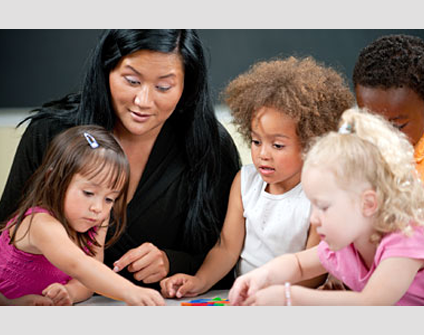
Preschool teachers must be trained properly to work with young children in a safe, effective and nurturing way in childcare centers and our training program helps to understand the students' unique needs with methods to foster self-regulation in children at preschool age.
Our Topics Include
- Requirements for teaching KG students
- Skills, Abilities and Knowledge Needed for KG Teachers
- Preparation to be a Kindergarten Teacher (Assessment Test)
- Patience
- Love and Passion towards Children
- Modulation of the Tone
- Education Psychology
- Hygiene
- Cultural Competence
- Nurturing Creativity
- Enjoy Teaching.
- Methods to teach Numbers
- Methods to teach Alphabet
- Methods to teach different shapes
- Methods to teach Rhymes
- Methods to Identify Animals
- Methods to identify the child's learning ability
- Understanding the child's psychology
- Dealing with Tantrums
- Evaluating the children
- Bringing out the hidden natural talent /potential
- Teaching the sharing and caring amongst children.
- Methods to teach physical activities without hurting